Industry News
Why Tender Rejections Hit 14% in 2026 — And What It Means for Port of Tacoma Freight Moving Through Federal Way
If you've been hauling containers off the Port of Tacoma or dispatching loads up and down I-5 this spring, you've felt it: the freight market isn't acting the way it did a year ago. Carriers are turni
If you've been hauling containers off the Port of Tacoma or dispatching loads up and down I-5 this spring, you've felt it: the freight market isn't acting the way it did a year ago. Carriers are turning down loads they would have grabbed in 2024. Spot rates are firming. And brokers are working the phones harder than they have in years.
The number behind that shift is the tender rejection rate — the percentage of contracted loads that carriers decline because they can find better-paying freight elsewhere. Tender rejection rates rose to nearly 14.3% in early February 2026, according to a SONAR and Ryder System monthly report, suggesting a potentially encouraging shift in the market. Compared to that inflection, the rate had previously hovered around 5% for parts of 2023 through 2025. For freight moving through Federal Way — the I-5 chokepoint between the Port of Tacoma and the Kent Valley distribution corridor — that shift is reshaping how loads get covered, where trucks park, and what shippers pay.
What the 14% Number Actually Means
To understand why 14% is a big deal, you need a baseline. In the tightest, most difficult-to-procure environments, national rejection rates exceed 20%. In the loosest markets, the OTRI averages below 4%. A healthy supply-demand balance seems to exist when rejection rates fall between 5–7%, with seasonal spikes around holidays pushing rates to 10–15%. "Healthy" implies that carriers have enough demand to support profitability and utilization, while shippers avoid prolonged service disruptions or rate inflation.
So when the national rate jumped from a years-long average near 5% to north of 14%, that wasn't a seasonal blip — it was a regime change. Recent readings in the metric surpassing 14% are "COVID-level type rejection rates," Werner Enterprises CEO Derek Leathers said at Stifel's 17th Annual Transportation & Logistics Conference in February.
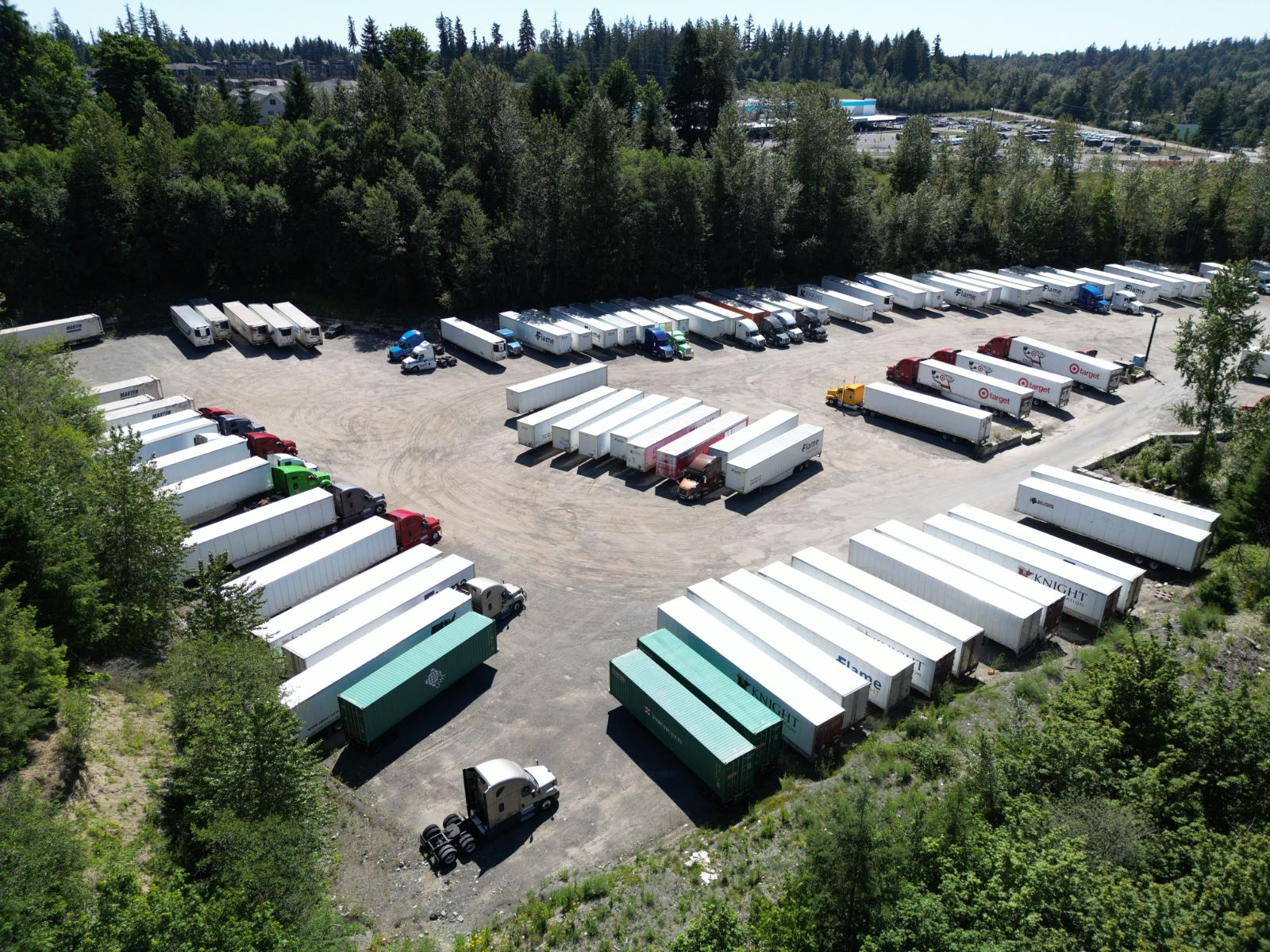
Looking for truck parking? Browse Flame Truck Parking — daily, weekly, and monthly options across the Pacific Northwest.
Why It's Happening in 2026
There isn't a single cause. There are three forces pulling in the same direction at once.
Capacity is shrinking. For the last few years, we saw waves of new entrants flood into the market. Now we're seeing net contraction. In plain English: more carriers are leaving than entering. When capacity shrinks while freight stabilizes, the market tightens. And tightening markets lead to higher prices. Years of soft rates pushed thousands of small carriers and owner-operators out of the business, and the survivors aren't desperate enough to take below-market loads anymore.
Spot rates are pulling drivers off contracts. Spot rates are outpacing contract rates: a widening gap is pulling capacity into the spot market, increasing rejection rates and signaling upward pricing pressure for shippers. The math is simple — when a driver can earn more on the spot board than on a routing guide load, the routing guide loses. Current rejection rates are sitting at 15.80%, while dry van spot pricing has climbed to $3.49 per mile.
Freight demand stopped collapsing. Demand is stable but not strong: freight demand remains flat overall, with limited import activity and cautious shipper ordering due to inflation concerns. Inflation continues to impact transportation costs: elevated fuel and broader input costs (PPI ~6%) are contributing to higher freight rates and economic uncertainty. The market doesn't need a boom to tighten — it just needs steady volume against shrinking capacity. That's exactly what's happening.
The Port of Tacoma Picture: A Twist on the National Story
Here's where Federal Way operators need to pay attention, because the Pacific Northwest isn't moving in lockstep with the national freight market.
On the maritime side, container volumes are actually down. The Northwest Seaport Alliance, which combines operations at the ports of Seattle and Tacoma, reported 228,166 containers handled in January, compared to 264,869 containers the previous year, a 13.9% decline. Officials attributed the decrease largely to the surge of shipments that occurred in early 2025 when companies accelerated imports ahead of expected tariffs. April total container throughput at NWSA dropped 21.4 per cent year on year, highlighting how breakbulk is currently outperforming the wider trade environment.
But breakbulk and project cargo are surging. NWSA handled 125,411 metric tonnes of breakbulk cargo through Seattle and Tacoma up and including April, up 24 per cent on same period last year. It attributed the growth to "strong industrial demand," despite continued weakness across wider container markets. The Pacific Northwest's growth signals a more pronounced rebound in industrial and heavy-lift flows tied to infrastructure and manufacturing demand.
What does that mean for freight moving through Federal Way? Less standard container drayage to chase, more project-cargo and flatbed work — and a tighter capacity picture for the loads that are moving. Flatbed capacity is especially tight, with rejection rates exceeding 40%, largely due to increased demand for raw materials tied to manufacturing and data center construction. If you run flatbed or step-deck out of Tacoma, this is your market.
What It Means for Drivers, Carriers, and Shippers in Federal Way
For drivers and owner-operators, the leverage has shifted in your favor for the first time in three years. Routing guides that paid $1.85 per mile are getting rejected because the spot board pays $3+. The carriers who survived the downturn have leaner operations and lower overall costs in some cases. If rates lift meaningfully, those operators will see margin relief quickly. If you're parking in or near Federal Way to stage drayage runs into Tacoma, you're sitting on prime real estate — close enough to the terminals to grab same-day moves, far enough out to find affordable overnight parking.
For carriers, contract negotiations are different now. The link between rejection rates and long-term contract truckload pricing is more straightforward but significantly lagged. Sustained higher rejection rates drive contract rate inflation, and the opposite is true as well. Because contract rates are typically negotiated on an annual basis, they move more slowly in response to market changes. Lock in lanes you want, but build in fuel and rate escalators.
For shippers and 3PLs routing freight off the Tacoma waterfront, the days of cheap, easy coverage are over for now. This increase is driving higher spot rates and more disrupted supply chains, forcing shippers to rely more heavily on brokers to cover loads at higher prices. Build buffer time into delivery windows, especially for I-5 lanes heading south to Portland or east over the Cascades, and expect to pay accruals on backup carriers.
What to Watch Through Summer 2026
A few signals worth tracking from your Federal Way yard or dispatch desk:
- Roadcheck aftershocks. Disruptions like Roadcheck quickly drove tender rejections and spot rates higher, highlighting an unstable, supply-constrained environment. Expect lingering tightness into June.
- Produce season ripples. In 2026, outbound Florida rejection rates are already sitting at 16.66%, approximately triple historical levels for this point in the season. That suggests additional tightening and volatility are still ahead as produce season continues ramping. When the Southeast pulls trucks in, the Pacific Northwest feels it on backhauls.
- Container volume recovery. Tacoma's container numbers will eventually rebound off this year's lows, and when they do, drayage capacity around Federal Way is going to get squeezed fast.
Park Smarter While
Need a parking spot?
Browse verified truck parking across the Pacific Northwest. Daily, weekly, or monthly — your call.
Find ParkingRelated articles
Driver Guide
Where to Charge Your Electric Truck in Kent, WA: Heavy-Duty EV Stations Near I-5 and the Kent Valley (2026 Driver Guide)
7 min read
Driver Guide
NEVI Round 1 Just Funded New WA Fast Chargers—What Kent-Based Owner-Operators Need to Know in 2026
6 min read
Driver Guide
Planning HOS-Compliant Charge Stops Out of Kent: Pairing Truck Parking with DC Fast Charging on I-5 and I-90
6 min read