Driver Guide
NEVI Round 1 Just Funded New WA Fast Chargers—What Kent-Based Owner-Operators Need to Know in 2026
If you're running freight out of Kent, the EV charging conversation just got a lot more real. After more than a year of federal pauses, lawsuits, and re-writes, Washington's NEVI Round 1 awards finall
If you're running freight out of Kent, the EV charging conversation just got a lot more real. After more than a year of federal pauses, lawsuits, and re-writes, Washington's NEVI Round 1 awards finally landed in January 2026—and the buildout you've been hearing about for years is actually breaking ground. Whether you're hauling battery-electric today, running diesel and watching the regulatory landscape, or planning a fleet refresh in the next 24 months, here's the straight talk on what NEVI EV charging Washington 2026 means for your operation.
What WSDOT Actually Awarded in January 2026
Let's start with the facts. Seattle startup Electric Era landed $5.05 million in National Electric Vehicle Infrastructure (NEVI) Program funding to install six charging stations along interstates and highways in Washington state. The company builds DC fast-charging systems that include giant batteries to help deliver and store power. That was just one slice of a larger pie. NEVI Round 1 grant recipients include Electric Era, Energy Northwest, EV Gateway, EVgo, and Tesla. Between the five companies, they will build charging stations within the next 24 months at 14 key locations along four interstate highways.
For Kent-based drivers, the corridor map matters most. The new EV charging stations will be located along I-90 in Cle Elum, Ellensburg, George, Issaquah, Moses Lake, North Bend, Ritzville and Veradale; along US 97 in Goldendale and Toppenish; along US 195 in Colfax and Pullman and along US 395 in Colville and Deer Park. If you run east over the Cascades regularly, that I-90 spine—Issaquah and North Bend in particular—is right in your daily backyard.
The political backstory is worth knowing because it explains the delay. The Trump administration in January halted NEVI funding, which was appropriated by Congress in 2021 to build out EV charging along the nation's major highways. Washington and others sued, and a federal judge ruled on Monday that the dollars had been illegally withheld. That ruling unlocked the awards you're seeing roll out now.
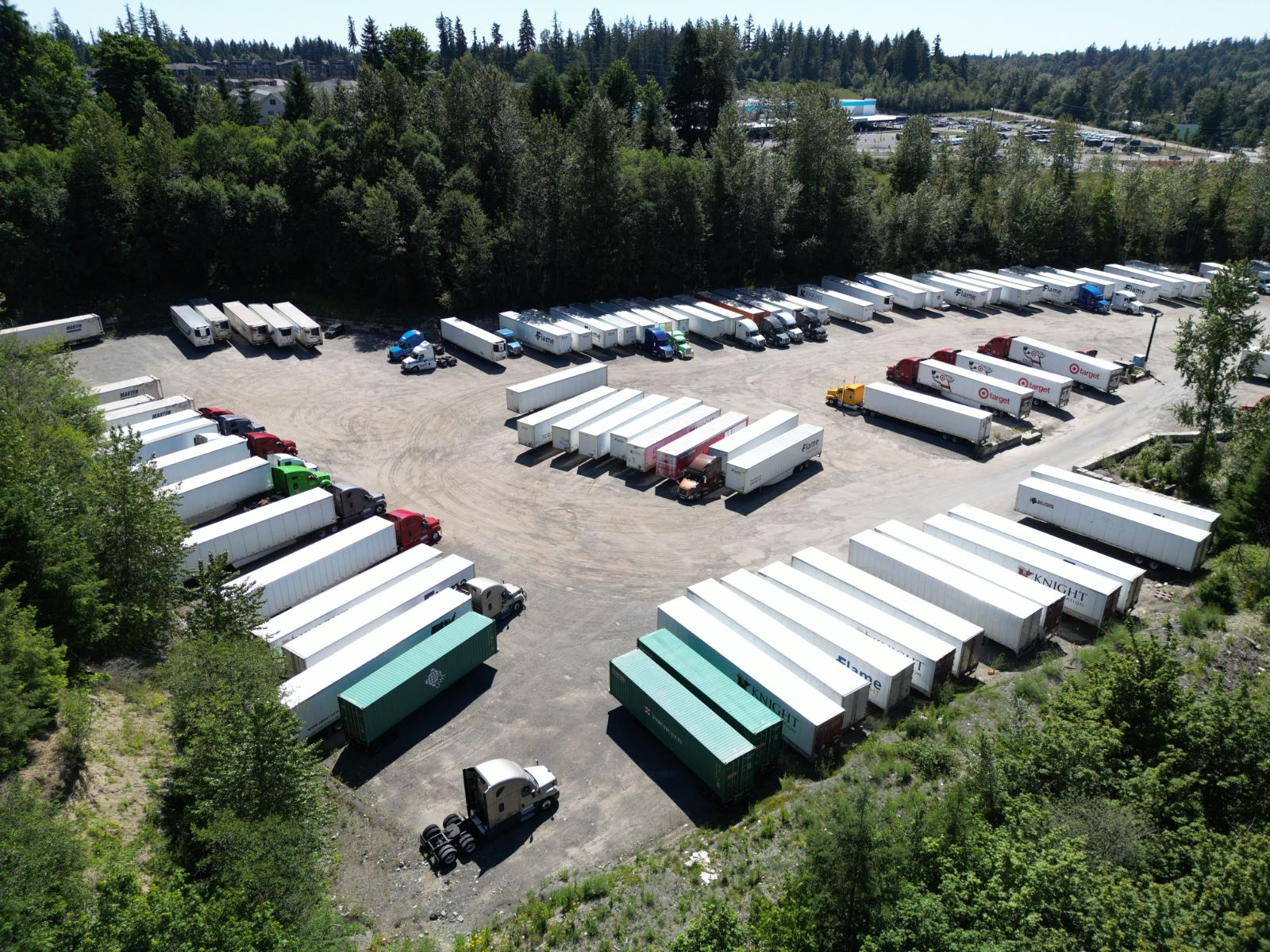
Looking for truck parking? Browse Flame Truck Parking — daily, weekly, and monthly options across the Pacific Northwest.
What This Means for Owner-Operators in 2026
Here's where you need to pay attention, even if you're not driving an electric Class 8 today. The new NEVI guidance opens the door to truck-scale charging in ways the original program didn't. States may now use NEVI funding for medium- and heavy-duty charging and upgrades to existing stations after light-duty buildout, supporting fleet electrification and charging along major freight corridors.
Translation: once Washington checks the box on light-duty corridor coverage, NEVI dollars can pivot to the kind of high-power chargers a tractor actually needs. That's a big deal because each station must feature at least four 150 kW DC Fast Chargers (DCFC) operating simultaneously, with voltage range supporting output voltages between 250V DC and 920V DC to ensure compatibility with both current 400V and next-gen 800V/900V vehicle architectures. The 800V+ support is what makes these sites at least theoretically truck-relevant when MDHD upgrades land.
You should also know the federal standards these new WA sites have to hit, because they'll affect your experience pulling in:
- Each NEVI-funded charging port must have an average annual uptime greater than 97%. No more pulling up to a dead pedestal.
- Charging stations located along and designed to serve users of designated AFCs must be available and accessible 24/7 year-round. Night runs, holiday loads—covered.
- Must support contactless payment without requiring a specific app or membership. Tap your card and go.
- NACS (J3400) is now mandated by the majority of states to accommodate the current vehicle market. Both NACS and CCS will be on site.
The Bigger Picture: Funding, Flexibility, and What's Next
Some of you are asking the right question: is NEVI even going to survive long enough to matter? Here's the current read. The NEVI program, funded with $5 billion through FY 2026, has resumed momentum after a 2025 funding freeze was overturned by a federal court order, leading FHWA to release new interim guidance and restore funding to states. As of late 2025, at least 384 EV charging ports have been built through NEVI, with $885 million apportioned for FY 2026 and multiple states opening or planning new funding rounds in 2026.
There's still political risk to track. The current FY 2026 USDOT appropriations act would transfer funds out of the NEVI program into general FHWA Highway Infrastructure Programs. If the package as it currently stands passes, then $503.8 million in NEVI formula grants, $300 million in NEVI competitive grants, and $75 million for the Joint Office will be transferred. That means Round 1 sites are mostly safe—they're already obligated—but later WA rounds could be smaller than planned.
The good news for our region: Washington plans to build out their network of EV charging and makes plans for a Round 2 NEVI solicitation in early 2026. As new RFPs are released, Electric Era is excited to work with States and partner with retailers, leveraging their technology to ensure a faster, more reliable, and more efficient buildout that serves the ever growing number of EV drivers across the United States. Round 2 is where you'd expect WSDOT to start pushing toward the kind of pull-through, high-amperage sites that work for tractors and reefers.
And the new rules give Washington room to put chargers where freight actually needs them. States are no longer strictly bound to the "50-mile spacing" rule. If a state can justify that a corridor is "fully built out," they can now redirect NEVI funds to rural roads, secondary highways, and Medium- and Heavy-Duty (MDHD) charging hubs.
Practical Moves for Kent Drivers Right Now
You don't need to buy an electric truck tomorrow, but you should be making three moves in 2026:
-
Watch the I-90 buildout. Issaquah and North Bend are within an hour of Kent. When those Electric Era and partner sites come online over the next 24 months, you'll have a real-world look at uptime, throughput, and pricing before you commit to anything.
-
Pay attention to dwell time and parking. NEVI sites are designed for fast charging, not overnight parking. A 30–45 minute charge session for a Class 8 still needs a safe, legal place to sit—and that's a separate problem from the plug itself.
-
Track Round 2 RFPs. If you own land near a freight corridor or you're a small fleet considering site hosting, the next solicitation is your window. Funds cover up to 80% of costs for acquiring, installing, operating, and maintaining public-access EV chargers meeting federal standards.
Find Truck Parking That Works With the New Charging Reality
Charging infrastructure only solves half the problem. You still need a safe, legal, properly sized spot to park your rig—whether you're staging for an early dispatch, killing your 10-hour, or waiting on a charge session at a nearby NEVI site. Flame Truck Parking connects Kent-based owner-operators and Pacific Northwest drivers with verified parking locations across the I-5, I-90, and SR-167 corridors that feed the new Washington charging network. As NEVI Round 1 sites come online along I-90 and beyond, having a reliable parking marketplace in your pocket means you're never scrambling for a spot near your next charge stop. Reserve your space today and stay ahead of the 2026 buildout.
Need a parking spot?
Browse verified truck parking across the Pacific Northwest. Daily, weekly, or monthly — your call.
Find ParkingRelated articles
Driver Guide
Planning HOS-Compliant Charge Stops Out of Kent: Pairing Truck Parking with DC Fast Charging on I-5 and I-90
6 min read
Driver Guide
Northwest Seaport Alliance Zero-Emission Drayage: What Kent Port Drivers Should Expect from the 2026 Charging Rollout
7 min read
Driver Guide
CCS vs. NACS vs. Megawatt Charging: A Kent Driver's 2026 Cheat Sheet for Class 8 EV Connectors and Pricing
6 min read