Industry News
What the 2026 Truckload Spot Rate Surge Means for Pacific Northwest Shippers and Consumers
After more than three years of a brutal freight recession, the U.S. trucking market has flipped. Truckload spot rates have surged into multi-year highs, capacity has tightened across major lanes, and
After more than three years of a brutal freight recession, the U.S. trucking market has flipped. Truckload spot rates have surged into multi-year highs, capacity has tightened across major lanes, and the ripple effects are already showing up in routing guides, contract negotiations, and—eventually—the prices Federal Way consumers pay at the shelf. For shippers and carriers across the Puget Sound corridor, understanding the 2026 truckload spot rate surge isn't optional anymore. It's central to how goods move in and out of the Pacific Northwest.
This piece breaks down what's happening, why it matters specifically for our region, and what shippers, drivers, and consumers should be watching through the back half of 2026.
The 2026 Truckload Spot Rate Surge: By the Numbers
The headline number tells the story. Truckload spot rates (inclusive of fuel) are holding elevated around $2.80 per mile nationally, per recent SONAR readings, up 23% from a year ago where it was at $2.33 per mile. Earlier this spring, the U.S. truckload spot market hit a new cycle high at $2.82 per mile on the National Truckload Index (NTI.USA)—that's the 7-day moving average of booked dry van spot rates, fuel included.
This isn't seasonal noise. The Curve (measuring year-over-year change in linehaul spot rates, excluding fuel) remained in inflationary territory and increased sequentially in Q1. In fact, Q1 truckload spot rates remained inflationary, up from Q4. Truckload spot rates (linehaul only, excluding fuel) increased 16.5% year-over-year at the end of Q1, up from 5.2% in Q4.
The gap between spot and contract pricing—usually a reliable signal of where the market is heading—has nearly closed. A year ago, contract rates carried an average premium of roughly $0.39 per mile over spot rates. By March 2026, that gap had narrowed to about $0.11 per mile, representing approximately $0.28 per mile of compression. Translation: the cheap-spot-market arbitrage that shippers have leaned on since 2023 is gone.
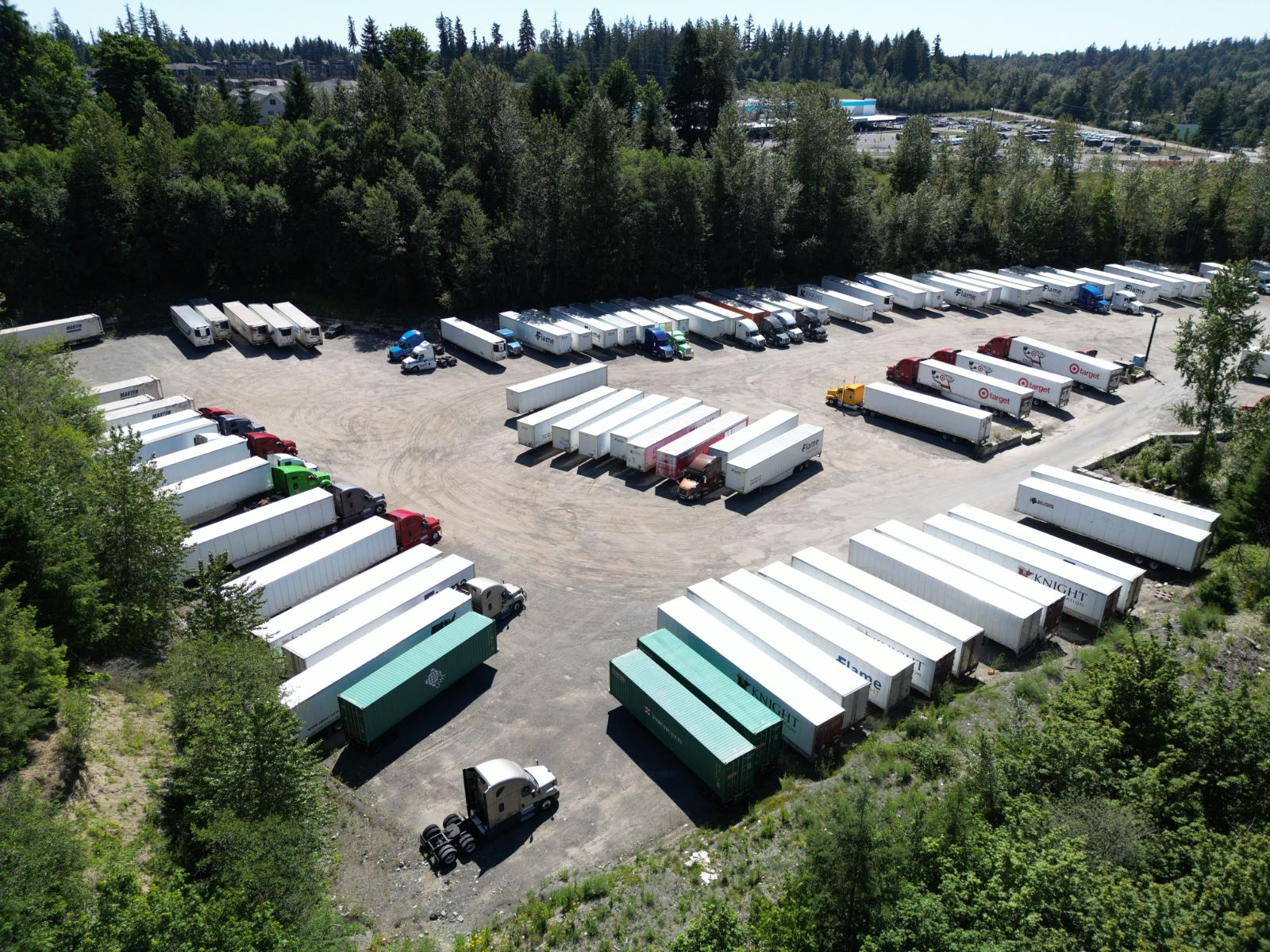
Looking for truck parking? Browse Flame Truck Parking — daily, weekly, and monthly options across the Pacific Northwest.
Why Capacity Tightened So Fast
The surge isn't primarily a demand story. It's a supply story, and it's been building for over a year. The freight market entered 2026 with tightening capacity driven by carrier exits, reduced fleet investment, and a persistent driver shortage. Regulatory changes further constrained the labor pool, removing drivers and slowing new entrants. Analysts expect gradual normalization by mid-2026, but structural challenges—labor scarcity and compliance costs—will continue to limit capacity expansion and keep upward pressure on rates.
Regulation has played an outsized role. On the regulatory front, the compliance crackdown began last summer (around mid-2025) with FMCSA audits of state CDL issuance, training provider registries, and non-domiciled licenses, and it's now starting to show real, measurable impacts on available capacity. This groundwork set the stage for the sharper moves in early 2026, including the non-domiciled CDL final rule (effective March 16) that severely limited eligibility and phased out many existing holders.
Carrier rejection rates confirm how tight things have gotten. Tender rejections are hovering near 14% — levels not seen consistently since the post-COVID unwind in 2022, and higher than anything in 2023, 2024, and 2025. Carriers are rejecting loads, pushing spot pricing higher, and creating real headaches for shippers' routing guides.
What This Means for the Pacific Northwest
The PNW has its own dynamics layered on top of the national picture. Late last year, overall market conditions in December were tighter than usual, resulting in elevated costs, which aligns with historical trends for the final two weeks before the holidays. Key stress points included the Pacific Northwest, where capacity remained constrained due to weather. Flooding and winter storms hit our region hard during the same window. A number of factors contributed to the increase: Midwest winter weather, and flooding in the Pacific Northwest.
Ocean and port-side decisions are reshaping inland trucking demand too. The Chinook service will be consolidated into a single Pacific Northwest loop serving Seattle, Vancouver, and Prince Rupert. These adjustments are intended to improve schedule reliability and provide greater flexibility across key trade lanes. More consolidated container volumes through Seattle and Tacoma mean more concentrated drayage and inland truckload demand—often radiating south through Federal Way along the I-5 corridor.
There's also more refrigerated capacity coming online for our region. Chicago-based Echo Global Logistics announced the enlargement of its EchoChill refrigerated less-than-truckload network with a new cooler facility in Sacramento, California. The firm noted the Sacramento site will assist shippers across the Pacific Northwest, Northern California, and the Mountain West in accessing consolidated refrigerated transport services aimed at lowering costs and boosting efficiency. That helps reefer shippers, but dry van users in Washington still face the same national tightness.
What Shippers Should Do Now
The window for cheap contract renewals is closing fast. "For shippers still operating on last year's pricing, the window to lock in favorable terms is probably closed, and that's before the fuel cost surge works its way into the numbers," DAT said. Looking forward, DAT iQ's 12-month forecast calls for dry van contract rates to rise about 8% and spot rates around 12%.
Practical moves for Federal Way-area shippers:
- Diversify your carrier base. Routing guide failures are becoming common as primary carriers reject more loads.
- Build in lead time. Same-day and short-notice loads are the first to see spot rate spikes.
- Re-evaluate intermodal. The volume is fueled by reliable rail service, excess container availability, and a significant cost spread versus truckload, often offering 20-30% savings on key long-haul lanes. Intermodal spot rates are currently running at half the rate of truckload spot rates.
- Lock in contracts before Q3 produce and Q4 peak season. RXO analysts note after several years of oversupply across trucks and drivers, the market is tightening. Carrier exits, slower fleet expansion, and growing driver constraints are limiting available capacity and helping accelerate rebalancing across the industry.
What This Means for Consumers in Federal Way
When linehaul costs jump 20%+, those costs eventually find their way into retail prices. Shippers have benefited from years of suppressed rates, but that era appears to be ending as compliance actions and natural attrition put pressure on capacity. Groceries, building materials, e-commerce parcels, and produce moving up I-5 from California all sit on top of truck rates that are now meaningfully higher than they were a year ago.
The good news: this isn't 2021. The cycle has turned. This isn't the 2021–2022 frenzy returning overnight, but resilient demand, elevated rejections, volume strength, and now policy-driven capacity removal—building from last summer's crackdown—are aligning to give carriers the edge. Consumers should expect gradual, not shock-style, pass-through pricing—especially on goods that ride long-haul dry van lanes.
What Drivers and Small Carriers Should Watch
For owner-operators and small fleets running out of Federal Way, Tacoma, and Kent, this is the most constructive operating environment in years. Spot rates have gained about $0.50
Need a parking spot?
Browse verified truck parking across the Pacific Northwest. Daily, weekly, or monthly — your call.
Find ParkingRelated articles
Industry News
Washington's Advanced Clean Trucks Rule in 2026: How ZEV Mandates Are Reshaping Federal Way Freight
6 min read
Industry News
The Driver Shortage Is Back: How English Proficiency Enforcement and CDL Crackdowns Are Tightening Capacity in 2026
6 min read
Industry News
EPA 2027 NOx Rule and the Spring 2026 Proposal: What Pacific Northwest Fleets Need to Know Now
7 min read