Industry News
EPA 2027 NOx Rule and the Spring 2026 Proposal: What Pacific Northwest Fleets Need to Know Now
For trucking operators based in Federal Way and across the Pacific Northwest, the next eighteen months will reshape how fleets buy, finance, and maintain Class 8 equipment. The EPA 2027 NOx rule — the
For trucking operators based in Federal Way and across the Pacific Northwest, the next eighteen months will reshape how fleets buy, finance, and maintain Class 8 equipment. The EPA 2027 NOx rule — the most aggressive heavy-duty diesel emissions standard in U.S. history — is now confirmed to take effect on January 1, 2027, and the agency's long-awaited spring 2026 adjustment proposal is finally moving through the federal rulemaking process. Whether you run a single rig out of the Port of Tacoma or manage a regional fleet servicing I-5 lanes from Seattle to Portland, the decisions you make this summer and fall will directly affect your equipment costs, replacement cycles, and freight margins for years to come.
This guide breaks down what the EPA 2027 NOx rule actually requires, what's in the spring 2026 proposal, and the practical steps Pacific Northwest carriers should take while there's still time to act.
What the EPA 2027 NOx Rule Actually Requires
The core of the rule is a dramatic cut to tailpipe nitrogen oxide emissions. The standards require heavy-duty commercial vehicles to limit nitrogen oxide (NOx) emissions to 0.035 grams per horsepower-hour during normal operation, 0.050 grams at low load, and 10.0 grams at idle, and will also increase the useful life of governed vehicles by 1.5 to 2.5 times and yield emissions warranties that are 2.8 to 4.5 times longer. The new limits currently tighten tailpipe NOx emissions to a level 80%-plus below the current standard and reduce the particulate matter limit by 50%.
As originally finalized, the durability provisions were a major sticking point for OEMs and fleets alike. The agency also will require that OEMs extend warranties to 450,000 miles from 100,000 and useful life limits to 650,000 miles from 435,000 miles. Those numbers translated directly into higher sticker prices, because manufacturers have to design — and warranty — aftertreatment hardware that performs cleanly for nearly twice as long as today's systems.
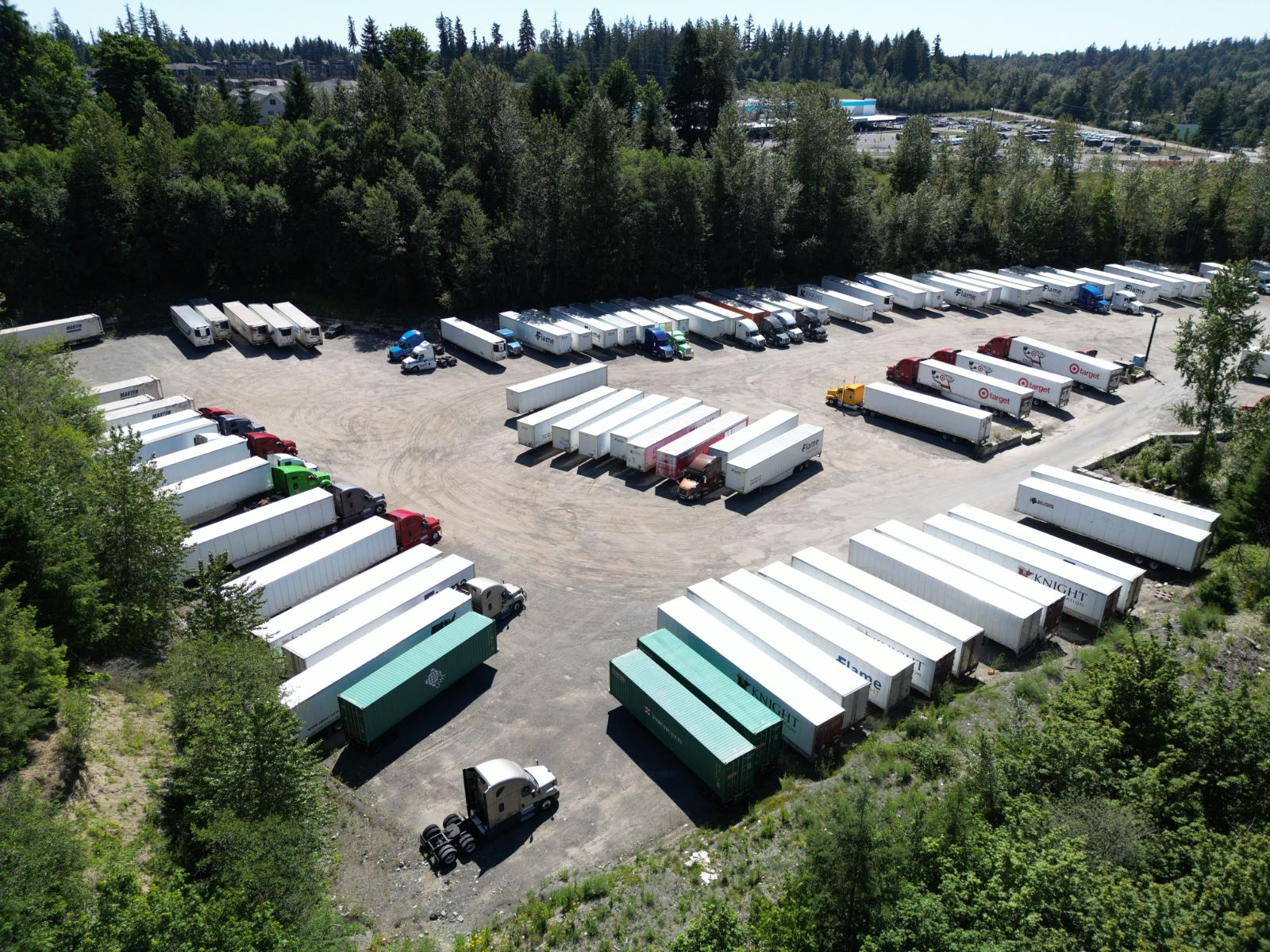
Looking for truck parking? Browse Flame Truck Parking — daily, weekly, and monthly options across the Pacific Northwest.
To hit the new limit, expect physically different trucks rolling onto Northwest lots starting next model year. Expect updates such as larger, more advanced SCR systems and dual dosing, better thermal management to keep aftertreatment hot during low load operation, and stronger calibrations and anti-tampering protections for long-term compliance. That matters in our climate: cold-start performance is where the new chemistry is most stressed, and the industry is largely focused on emissions performance during the first few minutes of operation, particularly in cold conditions, with everyone focusing on effectively the first five minutes of operation. Pacific Northwest fleets running early-morning starts out of Federal Way, Auburn, or the Kent Valley should expect a learning curve on cold-weather reliability in the first year.
The Spring 2026 Proposal: What's Changing — and What Isn't
After months of lobbying by 52 trucking associations asking for a delay to 2031, the EPA drew a clear line. Administrator Lee Zeldin announced EPA was reevaluating the Biden-era 2022 Heavy-Duty Engine and Vehicle rule that regulates oxides of nitrogen (NOx) and other emissions beginning with Model Year 2027, and the agency continues to reevaluate the rule and plans to propose a rule in the spring of 2026 that will take effect the following model year.
The agency's own statement makes the scope clear: "If finalized, the action will make major changes to the program requirements while maintaining the Model Year 2027 start of the standards, which can significantly reduce the cost of new heavy-duty vehicles, while still protecting human health and the environment, and avoiding regulatory distortions of the heavy-duty vehicle market."
According to ATA's read on EPA staff briefings, the cost relief will come from rolling back the durability mandates rather than the emissions ceiling itself. EPA's planned rulemaking is "likely to eliminate the extended warranty periods set to take effect in 2027 and instead retain the existing warranty requirements, while also revising useful life standards and making other technical changes to the rule," while changes to the rule's 0.035 gram/horsepower-hour standard or an extension of the 2027 implementation date "will be outside the scope" of EPA action.
Timing-wise, EPA is expected to publish the updated rule in the Federal Register around March or April 2026 and make it available for public comment. As of early June 2026, the industry is watching closely for that Federal Register notice and the comment window that follows.
What This Means for Truck Pricing and 2026 Pre-Buy Strategy
Here's the bottom-line math Pacific Northwest carriers need to model right now. Under the rule as originally written, industry estimates projected cost increases of $20,000–$25,000 or more per truck. With the EPA signaling that upcoming adjustments may reduce warranty and useful-life requirements, projections have decreased to roughly $8,000–$12,000 per truck. For Class 8 tractors specifically, forecasts indicate that once the required technology, including advanced emissions components and updated warranty requirements, becomes standard, the cost per Class 8 tractor will increase by approximately $8,000 to $15,000.
For a regional carrier running 25 power units out of South King County, that's $200,000 to $375,000 in additional capital cost on the next replacement cycle — before factoring in financing rates or insurance.
The pre-buy window is closing fast. By the third and fourth quarters of 2026, the market will enter a last-call phase; the release of the EPA's adjustment proposal is expected to trigger a surge in demand, leaving only limited availability at current cost levels. Once 2027 arrives, the industry faces a new reality where the 35mg NOx standard becomes mandatory, and equipment prices are projected to increase by $8,000 to $15,000 per unit.
There's a regional wrinkle Northwest fleets should not overlook. Certain Cummins engines may not be compliant in California Air Resources Board (CARB) states, so organizations must confirm a vehicle's final registration destination before placing an order to ensure operational viability. Paccar MX engines for 2026 will be 50-state certified with updated warranties, but differences between CARB and EPA certifications across other brands may lead to significant variations in both availability and secondary market value. Washington is not currently a CARB-adopted state for heavy-duty, but Oregon's Advanced Clean Trucks adoption and frequent California freight lanes mean Northwest carriers running interstate need to spec carefully.
Practical Steps for Federal Way–Area Operators
First, talk to your dealer this quarter about 2026 build slots. With limited production capacity, a compressed pre-buy period also raises the potential for allocation, and fleets relying on 2026 builds to avoid 2027 price increases may face competition for available build slots.
Second, budget for a learning curve on the new hardware. Most OEMs are expected to introduce redesigned engines with very little carryover from previous models, including updated aftertreatment systems, enhanced thermal management and new sensors. While these technologies aim to meet the 2027 standards, they will have limited real-world reliability history in their first years on the road.
Third, watch the Federal Register. The spring 2026 proposal will open a public comment period, and Washington-based carriers, owner-operators, and trade groups have a genuine opportunity to shape how the cost-reduction provisions get finalized before they take effect with model year 2027.
Plan Your Equipment — and Your Parking — for the EPA 2027 Transition
Whether you're pulling 2026 build slots forward or planning a post-rule fleet refresh, downtime and dwell costs add up f
Need a parking spot?
Browse verified truck parking across the Pacific Northwest. Daily, weekly, or monthly — your call.
Find ParkingRelated articles
Industry News
Why Tender Rejections Hit 14% in 2026 — And What It Means for Port of Tacoma Freight Moving Through Federal Way
6 min read
Driver Guide
Where to Charge Your Electric Truck in Kent, WA: Heavy-Duty EV Stations Near I-5 and the Kent Valley (2026 Driver Guide)
7 min read
Driver Guide
NEVI Round 1 Just Funded New WA Fast Chargers—What Kent-Based Owner-Operators Need to Know in 2026
6 min read