Operator Playbook
Stacking the 30% Federal EV Charging Tax Credit with Washington's 50% Infrastructure Credit: An Auburn Operator's ROI Playbook
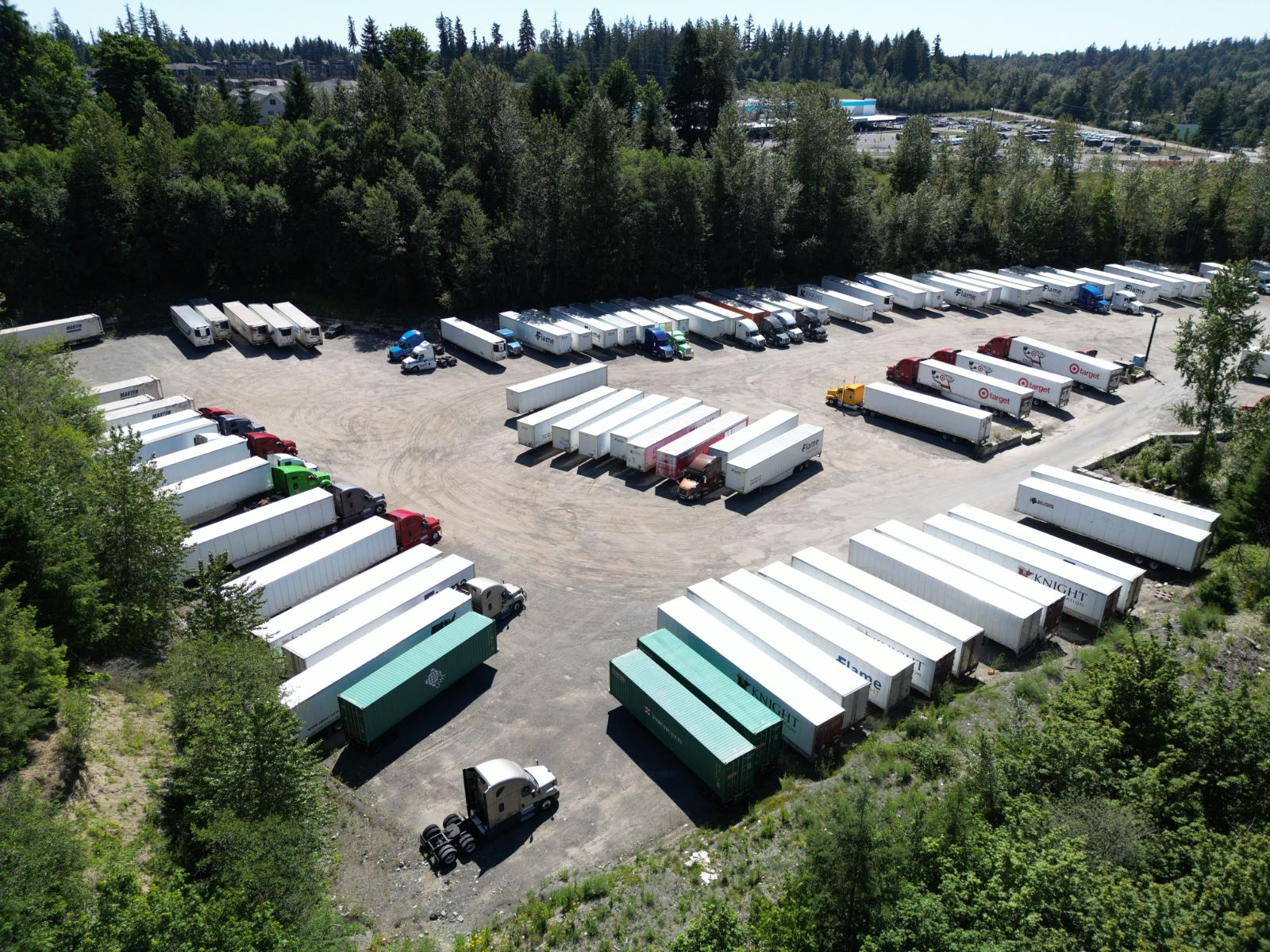
If you own or operate a truck parking lot in Auburn, you're sitting on one of the most valuable pieces of real estate in the Pacific Northwest freight economy. You're minutes from the Ports of Seattle
If you own or operate a truck parking lot in Auburn, you're sitting on one of the most valuable pieces of real estate in the Pacific Northwest freight economy. You're minutes from the Ports of Seattle and Tacoma, on the SR 167/I-5 drayage corridor, and inside the catchment area for a network of about 4,500 heavy-duty trucks that provide cargo hauling services to the ports of Seattle and Tacoma. That fleet is electrifying — and the question every Auburn operator is now asking is whether to put real money into charging infrastructure before the federal window slams shut.
The good news: if you move fast in 2026, you can stack two of the most generous incentives left in the U.S. tax code — the federal 30C credit and Washington's 50% Alternative Fuel Vehicle Infrastructure Credit — and reshape the ROI math on a heavy-duty charging deployment. The bad news: the federal piece evaporates June 30, 2026.
This playbook walks through how the two credits actually stack, what a realistic Auburn pro forma looks like at June 2026 equipment prices, and which operational decisions you need to make in the next 30 days.
The Federal 30C Credit: What's Left and the June 30, 2026 Cliff
Let's start with what the federal government is still offering. Under the current version of the 30C federal tax credit, you can claim 6% to 30% of the total costs of your commercial EV charging project, up to a maximum of $100,000 per installed EV charging port. The installation must take place in a non-urban or low-income area which the IRS defines by U.S. census tracts. Wage requirements apply in order to qualify for the full 30% tax credit.
The deadline is unforgiving. The federal EV charger tax credit (Section 30C) expires June 30, 2026. After June 30, 2026, this credit drops to $0. No extension legislation is pending. The OBBBA, signed July 4, 2025, explicitly set this expiration date as part of broader changes to clean energy tax credits. Given the current legislative environment, an extension is not expected.
For Auburn operators, the census-tract test is the first thing to confirm. Much of the industrial belt along West Valley Highway, the Stewart Road corridor, and the eastern slope toward Algona sits in tracts that qualify as either low-income or non-urban for 30C purposes. Pull your parcel's 11-digit GEOID and run it through the IRS eligibility locator before you sign a single contract. Under the Alternative Fuel Vehicle Refueling Property Credit (Section 30C), businesses can claim 6% of project costs per charging port (up to $100,000), or 30% of costs (same $100,000 limit) if prevailing wage and apprenticeship requirements are met. This credit applies to both hardware and commercial EV charging station installation expenses. To qualify, chargers must be located in eligible census tracts (low-income or non-urban), and projects must be placed in service before June 30, 2026.
Looking for truck parking? Browse Flame Truck Parking — daily, weekly, and monthly options across the Pacific Northwest.
Washington's 50% Layer: The State Credit That Changes Everything
Here's where Auburn operators have an edge over peers in Oregon, Idaho, or even California. Washington maintains an Alternative Fuel Vehicle Infrastructure Credit that goes well beyond what most states offer.
The expansion of the credit makes purchases of alternative fuel vehicle infrastructure eligible for the credit for up to 50% of the cost, increases the percentage of the incremental cost amount eligible for the credit to 75%, increases the percentage of the conversion cost eligible for the credit to 50%, and allows credits to be earned until the total amount of credit awarded since July 15, 2015, reaches $32.5 million. That $32.5 million cap is a real consideration — it operates on a first-come basis, and operators who file late may find the bucket empty.
The state program is broader than just the credit. The Washington State Department of Ecology offers grants for the replacement or repower of medium- and heavy-duty diesel refuse trucks, street sweepers, freight switcher locomotives, port cargo handling equipment, and forklifts with zero emission vehicles (ZEVs) and associated infrastructure. Eligible applicants include local and state government entities, utilities, port authorities, school districts, universities, and tribal governments. Applicants located in environmental justice communities will be given funding priority. If you can partner with a tribal entity (the Muckleshoot Indian Tribe is a major Auburn-area landowner), a port authority, or a utility customer, you may be able to layer Ecology grant dollars on top of the tax credits.
One operational rule went live this year that affects every Auburn project: Effective January 1, 2026, EV chargers on public works must be installed and maintained by persons that hold either an Electric Vehicle Infrastructure Training Program (EVITP) certification or equivalent training program certification, as long as the program is open to all general journeyman level electricians. Vet your electrical contractor's certifications before you award the bid.
Running the Auburn Pro Forma: Real Numbers for June 2026
Let's stack the math on a representative four-port DC fast charging deployment sized for Class 8 drayage tractors.
Equipment and install costs in 2026 are still significant. In 2026, equipment-only pricing for DC fast charging can range from roughly $10,000 to over $200,000 per dispenser, depending on power level, thermal design, and overall system architecture. Once installation, electrical work, utility upgrades, and site conditions are included, most commercial DC fast charging projects typically fall between $80,000 and $250,000+, while high-power sites with dedicated substations, integrated battery storage, or more demanding infrastructure can go well beyond that.
For heavy-duty truck applications, you can't skimp on cooling. Liquid cooling is becoming the new trend in ultra-fast charging solutions above 200 kW, since it allows charging stations to run at full load continuously without any power loss. Liquid cooling is almost essential for heavy-duty truck charging stations. The cost of liquid cooling is 20% to 35% higher compared to air cooling. However, the cost of maintaining a liquid cooling system is almost zero, which allows for a 10-year maintenance-free life.
Assume a realistic Auburn project: four 350 kW liquid-cooled dispensers, transformer upgrade, trenching across an existing paved lot, EVITP-certified install. Call it $1.2 million all-in — $300,000 per port.
- Federal 30C at 30% (prevailing wage met): $90,000 per port × 4 = $360,000
- Washington 50% Infrastructure Credit: capped on the post-federal basis per state guidance, but materially lowers your remaining capital exposure
- Net out-of-pocket after stacking: roughly $400,000–$500,000 on a $1.2M deployment
That's the difference between a project that pencils and one that doesn't. And it's only available if your chargers are placed in service by June 30, 2026.
Why Auburn Specifically — and Why Now
Auburn is undersupplied for heavy-duty charging. The city of Auburn in Washington has 90 public charging station ports (Level 2 and Level 3) within 15km. 63% of the ports are level 2 charging ports and 28% of the ports offer free charges for your electric car. Virtually none of those are sized for Class 8 tractors with sleeper cabs and 600+ kWh battery packs.
Meanwhile, state infrastructure money is flowing. After a temporary federal funding pause in 2025, Round 1 awards were announced in January 2026: $12.16 million to five companies for 14 new D
Need a parking spot?
Browse verified truck parking across the Pacific Northwest. Daily, weekly, or monthly — your call.
Find ParkingRelated articles
Operator Playbook
Pricing Models for Heavy-Duty Truck Charging in 2026: Per-kWh, Reservation, and Dwell-Time Revenue at Auburn Parking Lots
7 min read
Operator Playbook
From Overnight Parking to Overnight Charging: How Auburn Operators Can Add Depot-Style EV Bays Without Losing Stall Revenue
7 min read
Industry News
What the 2026 Truckload Spot Rate Surge Means for Pacific Northwest Shippers and Consumers
6 min read