Operator Playbook
I-5 Freight Corridor EV Charging: Why Auburn Truck Lots Are Prime Sites for 2026 NEVI-Funded Build-Outs
If you own or operate a truck lot in Auburn, the next 18 months will reshape what your land is worth. The combination of WSDOT's Round 2 NEVI solicitation along I-5, the rollout of megawatt charging h
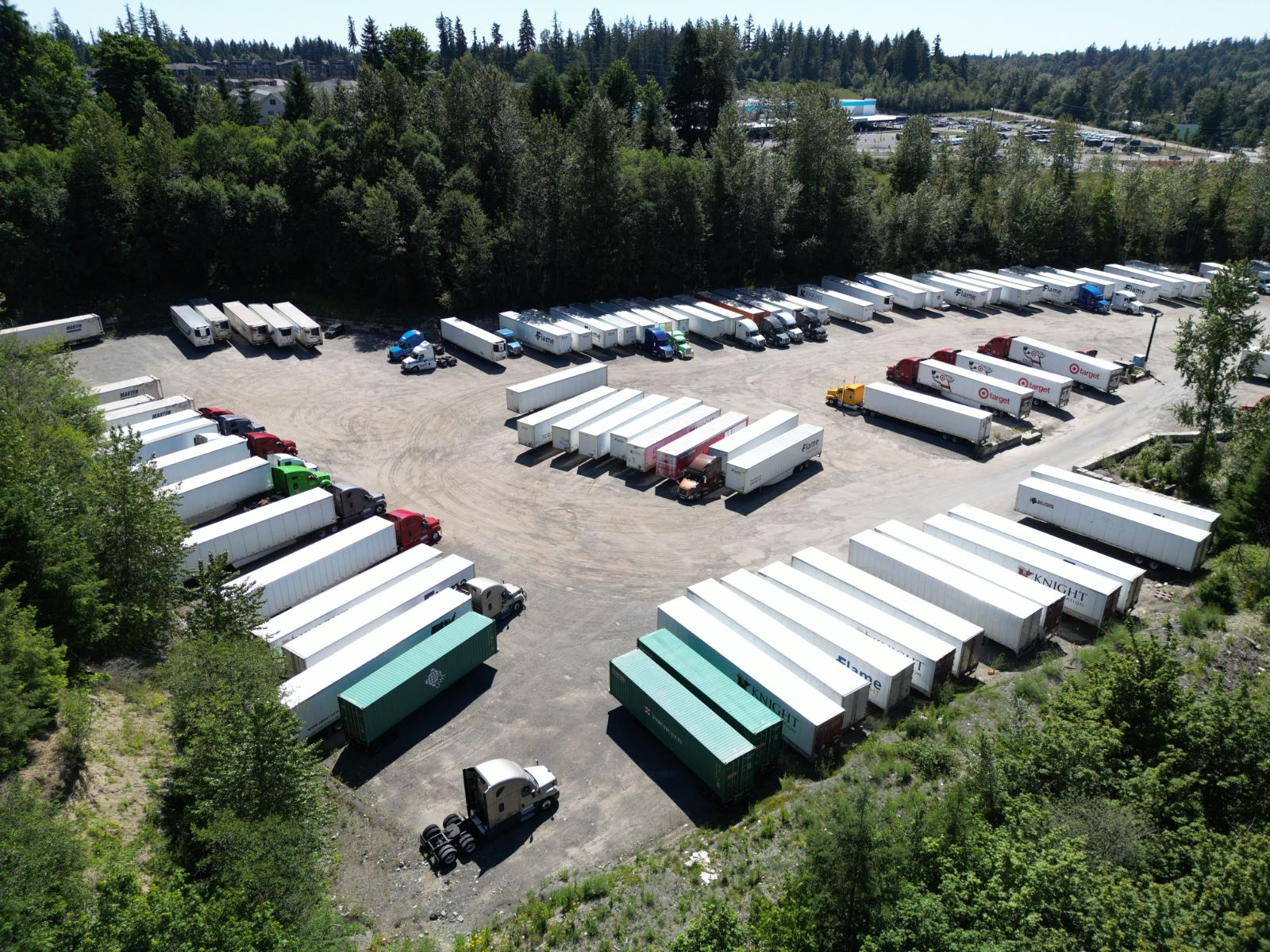
If you own or operate a truck lot in Auburn, the next 18 months will reshape what your land is worth. The combination of WSDOT's Round 2 NEVI solicitation along I-5, the rollout of megawatt charging hardware, and a structural shortage of safe truck parking in the Puget Sound region has created a window where Auburn dirt is no longer just a parking play — it's a strategic charging asset. This guide walks operators through why federal and state planners are looking specifically at corridors like yours, what NEVI Round 2 actually requires, and how to position your lot to capture the revenue.
Why Auburn Sits at the Center of the I-5 Charging Map
Auburn is one of the most freight-dense submarkets on the entire West Coast I-5 corridor. The American Transportation Research Institute named two Washington cities, Seattle and Auburn, in the top 25 most congested freight locations in the U.S., with both cities experiencing significant freight bottlenecks and increased demand for parking. That congestion is precisely what makes the city attractive to NEVI grant administrators: chargers need to be placed where trucks already stop.
The corridor geography reinforces the case. Auburn's position at the intersection of I-5 and Highway 167 makes it one of Washington's top commercial truck parking markets. State Route 18 cuts east-west across Auburn, intersecting with I-5, and SR 167 runs parallel to I-5 providing access to local industries and freight centers. Three high-volume freight routes converging in one city is a planner's dream — it means a single charging site can serve drayage out of Tacoma, regional runs to SeaTac and Kent, and long-haul I-5 traffic moving between Portland and Bellingham.
Demand is structural, not cyclical. National figures show just one parking space for every 11 trucks, and in Washington alone, 75% of truck drivers face difficulties securing safe parking, often weekly. Add electrification on top of that base demand and you have a use case where chargers, parking, and amenities all generate revenue from the same vehicle dwell time.
What NEVI Round 2 Actually Means for Washington Operators
Looking for truck parking? Browse Flame Truck Parking — daily, weekly, and monthly options across the Pacific Northwest.
The federal program that funds public corridor charging has been through a turbulent year, but the money is flowing again. On January 30, 2026, a federal court ruled that USDOT's 2025 freeze of the NEVI EV-charging program was illegal, restoring states' access to funds. Washington's NEVI grant awards program was paused by federal officials in 2025, reinstated in July after a preliminary court injunction, and on January 26 a federal judge ruled in favor of the states, concluding the federal funds had been unlawfully withheld.
For Auburn lot owners, the critical detail is which corridor gets funded next. In early 2026, WSDOT plans to invest, direct, and deploy Round 2 NEVI funding for new and existing EVSE sites along the remaining 1,493 miles of designated Alternative Fuel Corridors that need to be built out to meet NEVI requirements, including I-5, I-405, I-82/I-182, US-12, and US 101, which were not included in Round 1 solicitation. Round 1 went to I-90 and eastern Washington — the five recipients will build charging stations within the next 24 months at 14 key locations along four interstate highways, located along I-90 in Cle Elum, Ellensburg, George, Issaquah, Moses Lake, North Bend, Ritzville and Veradale; along US 97 in Goldendale and Toppenish; along US 195 in Colfax and Pullman and along US 395 in Colville and Deer Park. I-5 is the next big award pool.
The state's freight-electrification thesis is explicit. Washington intends to use remaining NEVI funds to support the development of public charging stations for medium- and heavy-duty vehicles, because Washington's highways are key freight corridors and WSDOT is investing $125 million in state funds for incentives for the purchase of zero emission medium- and heavy-duty vehicles that will need public charging locations along key freight corridors including I-5 and I-90. Translation: state money is paying fleets to buy electric trucks, and federal money is paying for the chargers those trucks will need. Auburn sits squarely in the overlap.
Federal guidance changes have also made operator-led sites easier to fund. States now have more leeway in station spacing, fund allocation to public roads, and supporting owner-operated sites — all aimed at speeding up deployments. States can now use NEVI funds for medium- and heavy-duty charging and station upgrades after light-duty buildout, supporting charging along freight corridors and fleet electrification.
Site Requirements: What Your Auburn Lot Needs
Lots most likely to win NEVI dollars or attract private CPO partnerships share a few characteristics. The baseline federal spec is well-established: stations spaced every 50 miles, equipped with at least four 150 kW DC fast chargers per site for a total of 600 kW capacity, and maintaining 97% uptime with open-access payment options.
For trucks, the technology bar is climbing fast. Depot charging with DC fast chargers in the 150–400 kW range remains the dominant model in 2026, while MCS at 1 MW+ is entering early corridor deployment but requires significant grid investment. If you have transformer capacity or sit near a substation, mention it on every application. Factor MCS into your infrastructure roadmap now, even if trucks are not MCS-capable yet — site selection, utility agreements, and civil work take time, and operators who start planning MCS capacity in 2025 and 2026 will have a meaningful head start when MCS-capable trucks arrive in volume.
Practical checklist for your Auburn parcel:
- Acreage and turning radius. A NEVI-compliant site needs pull-through stalls. Existing truck lots already solve this.
- Three-phase power proximity. A site within a quarter-mile of adequate distribution beats a greenfield every time.
- Highway visibility. Sites near I-5 Exits 142A/142B, SR 18, and SR 167 interchanges score highest.
- Existing TPIMS integration. WSDOT provides truck drivers with real-time parking availability information at rest areas and weigh stations along the entire I-5 corridor, with technology installed at public truck parking facilities and predictive parking availability features providing expected truck parking spaces up to four hours in advance. Lots that can plug into this data layer are more attractive.
- Open access. EV chargers must be non-proprietary, allow for open-access payment methods, be publicly available or available to authorized commercial motor vehicle operators from more than one company, and be located along designated FHWA Alternative Fuel Corridors.
The Revenue Case for Pairing Parking and Charging
The numbers are starting to work without subsidy. DHL, UPS, and FedEx have committed to electrifying their delivery fleets with a combined target of 20,000 electric trucks by 2026, and fleet operators are reporting 25–40% reductions in fuel and maintenance costs over comparable diesel operations. Those vehicles are running drayage and regional routes right through Auburn today.
A combined parking-and-charging site monetizes the same truck four ways: hourly or overnight parking, kWh sales, demand-response payments from Puget Sound Energy, and a federal or state grant that covers a large share of capex. Puget Sound Energy began testing vehicle-to-home technology in its service territory in 2026 in the first bidirectional EV charging pilot of its
Need a parking spot?
Browse verified truck parking across the Pacific Northwest. Daily, weekly, or monthly — your call.
Find ParkingRelated articles
Operator Playbook
Stacking the 30% Federal EV Charging Tax Credit with Washington's 50% Infrastructure Credit: An Auburn Operator's ROI Playbook
6 min read
Operator Playbook
Pricing Models for Heavy-Duty Truck Charging in 2026: Per-kWh, Reservation, and Dwell-Time Revenue at Auburn Parking Lots
7 min read
Operator Playbook
From Overnight Parking to Overnight Charging: How Auburn Operators Can Add Depot-Style EV Bays Without Losing Stall Revenue
7 min read