Operator Playbook
How Auburn Lot Owners Can Tap Washington's $112M Heavy-Duty EV Voucher Program to Justify On-Site Truck Charging
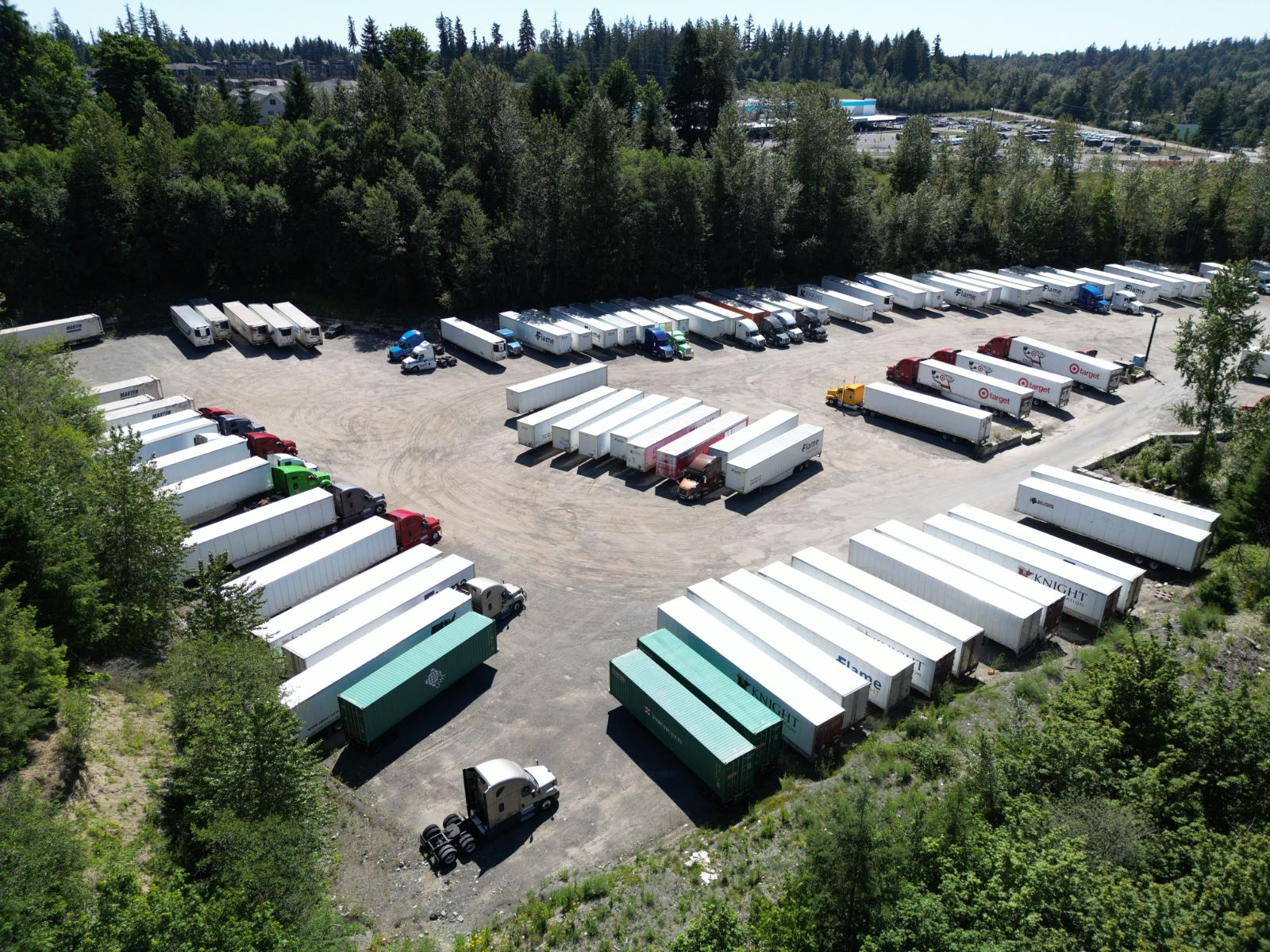
Auburn sits at the intersection of SR 167, SR 18, and a short hop from I-5 and the Port of Seattle/Tacoma — making it one of the highest-demand truck staging corridors in the Pacific Northwest. If you
Auburn sits at the intersection of SR 167, SR 18, and a short hop from I-5 and the Port of Seattle/Tacoma — making it one of the highest-demand truck staging corridors in the Pacific Northwest. If you own or manage a truck lot here, you've likely been weighing whether to add EV charging infrastructure as a revenue line. The economics just shifted decisively in your favor. Washington is launching a $112 million electric vehicle voucher program to encourage higher sales of commercial medium and heavy-duty vehicles, as well as off-road equipment, funded through the state's Climate Commitment Act and managed by the Washington State Department of Transportation.
For Auburn operators chasing truck parking EV charging revenue, this isn't just a fleet-side subsidy — it's the demand signal you need to underwrite chargers on your lot. More electric Class 7 and Class 8 trucks rolling out of Kent, Sumner, and Auburn distribution centers means more vehicles that need somewhere to sit, sleep, and plug in overnight. That's your lot.
What the $112M Voucher Program Actually Does for Your Lot
The voucher program doesn't write you a check directly — but it pulls EV trucks into your service area at scale. The $112 million voucher program will provide point-of-sale incentives for the purchase of medium and heavy-duty electric vehicles as well as off-road equipment. The point-of-sale voucher program will be available to qualified buyers starting in April. That means as of mid-2026, fleets purchasing electric drayage tractors, regional haulers, and yard trucks are getting meaningful discounts at the dealer counter — and those trucks need charging real estate.
Looking for truck parking? Browse Flame Truck Parking — daily, weekly, and monthly options across the Pacific Northwest.
Here's the catch fleets are facing, and why it's your opportunity: the state grapples with obstacles to EV adoption in the trucking industry, such as longer charging times, shorter travel ranges, and reduced cargo capacity compared to traditional diesel trucks. Longer charging times are a parking problem. A diesel rig fuels in 15 minutes; an electric Class 8 needs 60 to 90 minutes on a 350+ kW DC fast charger, or 8–12 hours on overnight Level 2/low-power DC. Either way, that truck is occupying a stall — and you can monetize both the parking and the electrons.
Why the Regulatory Stack Forces Demand to Auburn
The voucher program isn't operating in a vacuum. Washington maintains a mandate, known as the Advanced Clean Trucks (ACT) Rule, that requires truck dealers to meet a certain quota of EV sales. Even with new EV sales at their lowest level since January 2025 and used EV sales down compared to a year prior, the compliance pressure on dealers and fleets isn't going away — the voucher is the carrot meant to move trucks the regulation says must be sold.
For Auburn lot owners, this regulatory floor matters more than month-to-month sales fluctuations. Fleets serving the Northwest Seaport Alliance, Amazon's BFI/Kent campuses, and the Boeing supply chain are all under customer and shareholder pressure to electrify drayage and regional routes. They need charging-ready overnight parking within 30 miles of their dock doors. Auburn is in that ring.
The current charging landscape in Auburn skews heavily light-duty. The city of Auburn has 90 public charging station ports (Level 2 and Level 3) within 15km — but virtually none of those are pull-through, truck-accessible, or sized for Class 8 tractors. That's a glaring gap in a city this central to PNW freight. Whichever lots solve it first will lock in multi-year fleet contracts before national networks build out.
Building the Revenue Stack: Parking + Charging + Demand Charges
The financial case for a charging-enabled truck lot in Auburn rests on three stacked revenue streams:
1. Premium overnight parking. Standard Auburn truck stalls rent in the $250–$450/month range. EV-equipped pull-through stalls with even modest 80–150 kW charging command 40–80% premiums because fleets will pay to guarantee a charged truck at dispatch. Reservation-based EV stalls also reduce no-shows.
2. Energy resale margin. Puget Sound Energy's commercial rates leave room to mark up kWh delivery. Operators typically resell at $0.35–$0.55/kWh against wholesale costs in the $0.09–$0.14 range. A single Class 8 tractor pulling 400 kWh per overnight session generates $80–$160 in energy revenue alone — on top of the parking fee.
3. Utility make-ready and federal/state cost-sharing. PSE's commercial EV programs cover significant portions of transformer upgrades, trenching, and conduit for qualifying fleet/public charging sites. Combined with remaining federal alternative fuel infrastructure credits and Climate Commitment Act-funded grants flowing through Commerce and WSDOT, capital exposure on a 4–8 stall buildout can be reduced by 40–60%.
Practical Steps to Position Your Lot in the Next 90 Days
If you're sitting on a paved or graveled lot in Auburn — particularly anything near 15th Street NW, the West Valley Highway corridor, or the C Street SW industrial cluster — here's the move order:
- Pull a load study from PSE now. Lead times on three-phase service upgrades and pad-mount transformers are still running 9–14 months. The lots that started this paperwork in Q1 2026 will be energized in Q1 2027 — right as voucher-funded EV truck deliveries hit the road in volume.
- Reserve 2–4 stalls for pull-through charging. You don't need to electrify the whole yard. Start with a high-margin pilot bay that can handle 80–150 kW charging for overnight sessions. Validate the demand before scaling.
- Lock fleet anchor tenants. Talk to local drayage operators, last-mile fleets, and refrigerated carriers running Kent–Auburn–Sumner loops. Many are quietly piloting one or two electric tractors and desperately need predictable overnight charging close to their domiciles. A signed 24-month commitment from one anchor tenant underwrites your construction loan.
- Watch the voucher pipeline. Although car sales aren't expected to meet EV quotas for this year, the program is structured so that manufacturers are still expected to remain in compliance. Translation: dealers will be pushing inventory hard through late 2026 to clear ACT obligations, and fleets that buy will be looking for charging partners immediately.
The Window Is Real, and It's Narrow
Diesel-only truck lots will keep cash-flowing in Auburn for years — that's not the question. The question is whether you want to be the operator who locked in the EV freight customers in 2026 at premium rates, or the one trying to retrofit in 2029 when every national truck stop chain has already moved in. The vouchers are funded through the Climate Commitment Act, which has served as the primary source of public money behind transportation electrification in this state — meaning state policy is actively pushing freight toward your lot, not away from it.
Ready to turn your Auburn lot into a charging-enabled revenue engine? Flame Truck Parking connects Pacific Northwest operators with fleets actively searching for EV-ready overnight parking in Auburn, Kent, Sumner, and the SR 167 corridor. List your lot, advertise your charging stalls (existing or planned), and capture the truck parking EV charging revenue that Washington's $112M voucher rollout is putting directly in your service area. Get your Auburn lot listed today →
Need a parking spot?
Browse verified truck parking across the Pacific Northwest. Daily, weekly, or monthly — your call.
Find ParkingRelated articles
Operator Playbook
I-5 Freight Corridor EV Charging: Why Auburn Truck Lots Are Prime Sites for 2026 NEVI-Funded Build-Outs
6 min read
Operator Playbook
Stacking the 30% Federal EV Charging Tax Credit with Washington's 50% Infrastructure Credit: An Auburn Operator's ROI Playbook
6 min read
Operator Playbook
Pricing Models for Heavy-Duty Truck Charging in 2026: Per-kWh, Reservation, and Dwell-Time Revenue at Auburn Parking Lots
7 min read