Truck Parking Space Dimensions: How Big a Stall Needs to Be
How big a truck parking space should be for a truck and trailer, a bobtail or a box truck, what sets those numbers, and how to lay out the aisles around them.
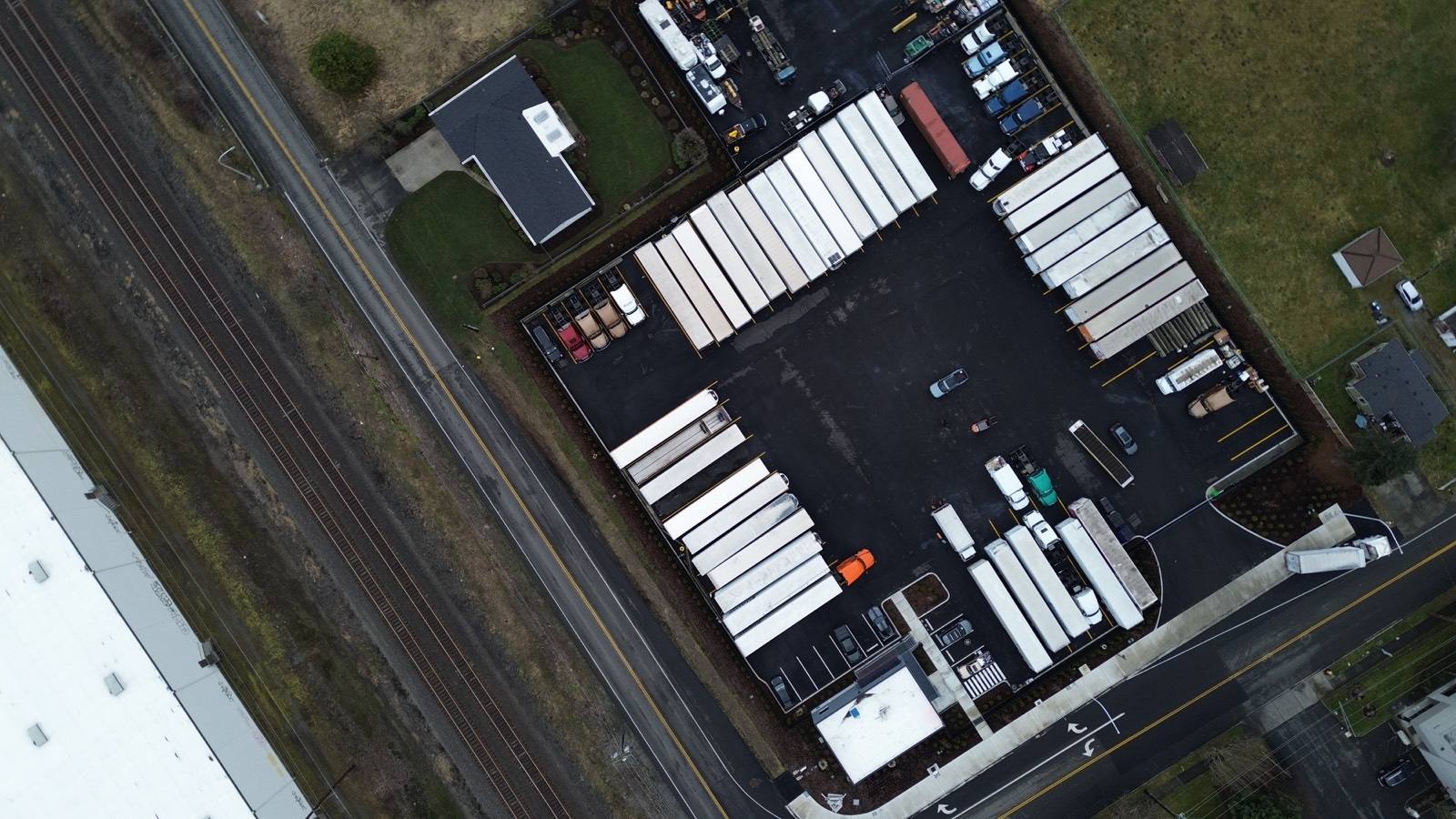
The short answer: 12 feet wide, 70 feet long
Plan a truck and trailer parking space at least 12 feet wide and 70 feet long. That is the minimum the Owner-Operator Independent Drivers Association, the American Trucking Associations and the Washington Trucking Associations asked Washington lawmakers to adopt in 2022, after a draft bill proposed 54 by 11 feet. Their point was simple: most long-haul rigs do not fit in 54 feet.
Treat 70 feet as the floor, not the target. A sleeper cab pulling a 53-foot trailer can run longer, so yards built for over-the-road trucks often lay out longer stalls or pull-through lanes.
Where the numbers come from
A stall is sized from the rig that has to fit in it, plus room to get out of the cab:
- Width: trucks on the national highway network can be 102 inches (8.5 feet) wide. A 12-foot stall leaves about 21 inches on each side for mirrors and an open door.
- Trailer length: federal rules make every state allow at least a 48-foot semitrailer, and 53 feet is the common length for dry vans and reefers today.
- Overall length: on the national network, states cannot cap the overall length of a truck and semitrailer, so the cab is not counted in any legal limit. A long sleeper adds a lot to the trailer.
- Height: there is no federal height limit. States set their own, usually 13 feet 6 inches to 14 feet, so a gate, canopy or sign over a truck lane needs at least that much clearance.
Smaller trucks need less, but not much less
A truck on its own (a bobtail) or a straight box truck fits in a shorter stall, and some yards price those spaces separately. A trailer dropped on its own needs the trailer's length plus room at the nose for the landing gear and for a truck to back under it.
If one yard takes a mix, stalls sized for the longest rig keep every space usable for any vehicle.
Back-in or pull-through: plan the aisle as well as the stall
The stall is only half of the space a truck needs. The other half is the room to get in and out of it.
- Pull-through stalls are the easiest for drivers and need a drive lane at both ends.
- Back-in stalls fit more trucks in the same yard, but need a wide aisle in front for the driver to swing the trailer in.
- Angled stalls make backing easier than 90-degree stalls and need less aisle width, at the cost of some spaces.
- Keep traffic one way where you can, with the entrance and exit apart, so trucks are not passing each other in an aisle.
- Mark stall numbers where a driver can read them from the cab, at night.
Planning a truck parking yard
Start from the vehicles you want to take and the number of trucks, then work out stalls, aisles and the gate together. The gate and the first turn inside it limit a yard more often than the stalls do.
If you have the land and want it to earn from truck parking, you can list it on Flame Truck Parking. You set the vehicle types you take, the rates and the access rules, and drivers book and pay online.
Check the fit before you book
Every Flame Truck Parking listing shows the vehicle types it takes, so you can see whether your rig fits before you pay. On yards with numbered monthly spots, each spot shows its own size and photos.
See truck and trailer parking, monthly truck parking or list your property.
Key takeaways
- Plan a truck and trailer stall at least 12 feet wide and 70 feet long.
- Trucks can be 102 inches wide, and 53-foot trailers are the common length.
- There is no federal height limit; states set 13 feet 6 inches to 14 feet.
- Size the aisle with the stall: back-in stalls need room to swing the trailer.
Find a space your rig fits
Search by city, check each yard's vehicle types and rates, and book online.
Search Truck Parking